

How Long Does Wedding Planning Take: Timelines, Milestones, and Realistic Expectations
Most couples plan a wedding in about 12–18 months, though you can pull off a well-organized celebration in as little as a few months or spread planning over two years for more flexibility.
The average wedding planning timeline spans 12 to 18 months, though the duration varies based on venue availability and event complexity. Initial stages involve budgeting and guest list finalization, followed by securing high-demand vendors.
While micro-weddings may be organized in under six months, larger celebrations typically require a year of preparation to manage logistics, attire fittings, and administrative requirements effectively.
This guide breaks down the average timeline, the factors that speed up or slow down planning, and a clear schedule you can adapt whether you have a short engagement, a standard year-long timeline, or a long lead time for a destination celebration.
You’ll also find key decision points and practical tips to streamline tasks so your planning stays on track without swallowing your life.
Contents
Average Timeline for Wedding Planning
Most couples spend about a year planning, though timelines shift based on venue availability, guest count, and whether you hire a planner. Start with the big decisions—date, venue, budget—then lock vendors and fine-tune details.
Typical Duration for Planning a Wedding
On average, expect 12–18 months from engagement to wedding day. That window gives you time to book popular venues and hire key vendors such as caterer, photographer, and band or DJ.
If you have a tight timeframe (3–6 months), prioritize venue and guest-list decisions immediately and accept limited vendor choice or higher costs. For 18–24+ months, you gain flexibility: book top vendors, spread payments, and reserve peak-season dates.
Use a simple timeline: 0–3 months (budget, guest list, venue), 4–9 months (vendors, attire, invitations), 9–12 months (final design, fittings), final 1–2 months (confirmations, seating, rehearsal). Adjust based on your needs and location.
Breakdown of Major Planning Phases
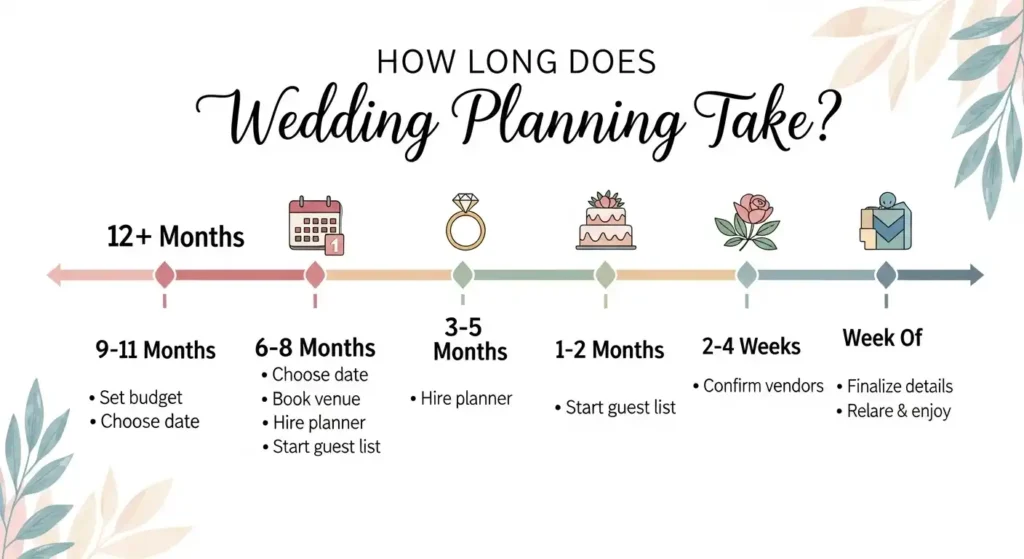
0–3 months: Set budget, draft guest list, choose and book venue and officiant. These decisions determine capacity and most major costs.
4–9 months: Hire vendors—photographer, caterer, florist, entertainment—and order attire. Send save-the-dates if needed, and begin designing ceremony and reception flow.
9–12 months: Mail invitations, finalize menu, confirm rentals and décor, schedule hair and makeup trials. Start seating chart and transportation logistics.
Final 1–2 months: Confirm RSVPs, create final timeline for vendors, hold rehearsal, and distribute day-of roles. Collect vendor contracts and emergency kit items. Use checklists and vendor check-ins weekly.
Differences by Wedding Size and Style
Intimate weddings (under 50 guests) can often be planned in 3–6 months. You’ll need fewer vendors and less complex logistics, so focus on venue availability and personalized details.
Large weddings (150+ guests) typically require 12–18 months or more. You’ll need bigger venues, coordination with multiple vendors, and more lead time for rentals, permits, and guest accommodations.
Destination weddings require 9–12 months at minimum to coordinate travel, block hotel rooms, and handle legal requirements. DIY or festival-style weddings may need extra prep time for build/setup and volunteer coordination.
Consider hiring a planner for complex or large events; their vendor relationships and timeline management can shorten planning stress and reduce last-minute problems.
Factors That Influence Wedding Planning Time
Several concrete elements determine how long your planning will take: the number of guests and the complexity of events, how far in advance you can book venues and vendors, and your personal schedules and hard deadlines.
Each factor changes both the sequence of tasks and how quickly decisions must happen.
Guest Count and Wedding Complexity
Your guest list size drives nearly every logistical decision. A 50-person backyard party requires fewer tables, rentals, and chairs than a 250-person reception, which means less time negotiating quotes, obtaining permits, and coordinating floor plans.
More guests also increase catering quoting cycles, dietary accommodations, place cards, and RSVPs to chase.
Complexity multiplies time: multiple events (rehearsal dinner, brunch, welcome party) add separate vendor bookings and timelines.
If you plan cultural or religious rituals, allot extra time to find officiants or specialty vendors familiar with those traditions.
For large or multi-day celebrations, expect planning to move toward the 12–18 month range; small, single-event weddings can often be arranged in 3–6 months.
Venue and Vendor Availability
Popular venues and sought-after vendors often book 12–18 months ahead, so venue choice usually sets your planning window.
If you want a specific weekend or photographer, confirm availability first to avoid reshaping every other plan. Flexible dates expand options and shorten time spent negotiating.
Vendor types affect how fast you can lock details: caterers and photographers typically require deposits and a menu or shot list months before the date, while florists and day-of coordinators can finalize closer in.
Destination weddings add logistics—travel, legal requirements, and on-site inspections—so start earlier. Use a prioritized vendor list to focus communications and reduce decision cycles.
Personal Schedules and Deadlines
Work schedules, school calendars, medical commitments, and partner availability shape your timeline. If you or key family members work seasonal shifts or travel frequently, you’ll need extra lead time to schedule vendor meetings and tastings.
Similarly, if you must align the date with immigration, military leave, or university breaks, those fixed deadlines compress planning tasks into tighter windows.
Your planning bandwidth matters. If you have limited time, hire a planner or set firm decision deadlines to keep momentum.
Budget approvals and who pays also change timing—waiting on funding or family input can delay contracts and deposits, so assign decision owners and deadlines to prevent bottlenecks.
Relevant reading on average timelines and venue booking patterns can help you match your schedule to realistic planning windows: learn more about typical planning timelines and venue availability at Brides.
Creating a Wedding Planning Schedule
You’ll balance long-lead items (venue, caterer, photographer) with shorter tasks (invitations, final fittings). Build a timeline that locks major vendors first, then spaces smaller decisions so you avoid deadline bottlenecks.
Starting Early vs. Last-Minute Planning
Starting about 12–18 months before the date gives you the broadest vendor choice and better weekday availability. You can tour venues, compare proposals, and secure a preferred photographer and caterer without rush.
Early planning reduces stress around guest list changes and gives time to shop for attire, schedule tastings, and plan decor experiments.
Last-minute planning (3 months or less) is possible but requires tradeoffs: limited vendor availability, higher fees, and fewer date options. You must prioritize bookings by calling vendors directly, asking for last-minute cancellations, and being flexible on weekday or off-peak times.
Use a checklist and daily blocks: book venue and officiant first, then caterer and photographer, then rentals and attire. Expect to delegate more and accept fewer customization options.
Month-by-Month Planning Timeline
12–18 months: Book venue and officiant, set budget, draft guest list, and hire planner if needed. Reserve your photographer, caterer, and key rentals.
8–10 months: Choose wedding party, order dress and suits, confirm florist and entertainment. Mail save-the-dates if you’re inviting out-of-town guests.
4–6 months: Finalize menu, order invitations, confirm linens and rentals, schedule hair and makeup trial. Apply for marriage license requirements specific to your location.
2–3 months: Send invitations, confirm RSVPs process, finalize seating plan draft, and complete registry. Follow up with guests who haven’t responded.
4–8 weeks: Final dress fitting, confirm vendor arrival times, create day-of timeline, and prepare payments and tips. 1–2 weeks: Pack for honeymoon, assemble emergency kit, and recheck guest count with caterer.
Adjust these windows based on vendor lead times, destination logistics, and the scale of your event.
Prioritizing Essential Tasks
Rank tasks by irreversibility and lead time: venue, officiant, and key vendors are highest priority because they lock your date and define capacity. Make confirmed bookings your baseline before spending on aesthetics.
Set a budget allocation: roughly 40–50% on venue and catering, 10–15% on photography/videography, 5–10% on attire, and the remainder for decor, rentals, and extras. Tailor percentages to what matters most to you.
Create a short master checklist with three columns: Must Book (date-sensitive), Plan (important but flexible), and Later (decor, playlist tweaks). Review that list weekly and move items as you confirm vendors.
Use automated reminders and shared calendars so you and anyone helping you stay aligned and avoid duplicated tasks.
Key Milestones and Decision Points
You’ll lock in the elements that shape your day and your budget, then finalize logistics and guest-facing details.
Prioritize dates, capacity, and payment terms first so you can build the rest of the plan around them.
Securing the Venue
Choose a venue within your target budget that fits your guest count and preferred date range. Ask about capacity limits, available dates, corkage or vendor restrictions, on-site coordination, and whether backups exist for bad weather.
Get the total rental cost, deposit amount, payment schedule, and cancellation/refund policy in writing. Confirm what the rental includes: tables, chairs, linens, lighting, sound equipment, and cleanup.
If you need a separate space for the ceremony, rehearsal, or getting-ready rooms, verify availability and any additional fees.
Visit the space at your planned ceremony and reception times to check lighting and flow. Ask for vendor lists and sample floor plans.
Once you sign a contract, immediately block nearby hotels and send a save-the-date if the venue’s popularity will affect guest travel.
Hiring Major Vendors
Book vendors who affect your date and guest experience first: photographer, caterer, and DJ/band. Photographers and florists can book out a year or more, while excellent caterers and entertainers are often held weeks in advance.
Request detailed proposals that list hours of service, overtime rates, deliverables, and payment schedules.
Compare portfolios and reviews, then confirm logistics: load-in windows, power needs, site access, and liability insurance. For caterers, confirm menu tastings, dietary accommodations, plate counts, and staffing ratios.
For music, provide a must-play and do-not-play list and determine whether the venue requires a sound curfew. Get signed contracts with clear cancellation and force majeure clauses.
Choosing Attire and Invitations
Start dress and suit shopping early enough to allow for alterations—typically 6–9 months for custom or complex gowns, 2–4 months for off-the-rack suits.
Schedule fittings and bring shoes and undergarments you’ll wear on the day. Order bridesmaid dresses and tuxes with their lead times and alteration windows in mind.
Design and order invitations once you have the venue, date, and basic timeline. Allow 6–8 weeks for printing and assembly, plus mailing time.
Include RSVP deadlines that give you a clear headcount at least 6–8 weeks before the wedding. Track invitee responses and dietary needs immediately so you can finalize vendor counts and seating.
Tips for Streamlining the Planning Process
Focus on tasks that save time and reduce decision friction: delegate vendor research, lock major vendors early, and set firm budgets and non‑negotiables to guide every choice.
Utilizing Wedding Planners
A wedding planner can cut weeks from your timeline by handling vendor sourcing, contract negotiation, and day‑of logistics.
Hire either a full‑service planner if you want help from concept to execution, or a month‑of coordinator if you’ve already booked major vendors but need timeline and day management.
When interviewing planners, ask for a sample vendor list, a breakdown of fees, and references for events similar in size and style to yours.
Confirm what’s included—vendor communication, design work, timelines, and onsite coordination—and get those items in the contract.
If budget limits you, consider hiring a planner for key phases only: vendor selection and final month coordination.
You can also use a planner for a la carte services like vendor referrals, rehearsal management, or contract reviews.
Effective Communication Strategies
Set a single decision‑maker or a small decision team to prevent delays from conflicting opinions.
Use a shared document or app for budget tracking, guest list updates, and vendor contacts so everyone sees the latest information in real time.
Create a weekly 20‑minute check‑in with your partner and any planners or key family members to resolve questions quickly.
For vendor communications, use email for formal agreements and one designated phone contact for urgent issues to keep records clear and avoid duplicated messages.
Write down non‑negotiables (guest count, date range, must‑have vendor types) and share them with vendors up front.
That prevents wasted proposals and lets vendors give accurate availability and cost estimates.
Special Considerations for Destination Weddings
You need more lead time, stricter vendor contracts, and clear guest communication than for a local wedding. Budget for travel, room blocks, legal paperwork, and contingency plans early.
Extended Planning Timelines
Destination weddings commonly require 12–18 months of planning to secure venues and travel arrangements.
Resorts and popular venues book weddings far in advance, so lock your date and room block as soon as you have confirmed the location.
Give guests at least 6–9 months’ notice so they can book flights and request time off work. Provide a travel timeline that lists deposit deadlines, group flight options, and the final RSVP date.
Use a simple checklist to track key milestones:
- Venue contract and room block confirmed
- Vendor agreements (photographer, caterer, officiant)
- Travel deposits for group rates
- Invitations and travel information sent
Consider hiring a local planner or choosing a resort package to reduce back-and-forth and avoid late availability problems.
Travel Logistics and Legal Requirements
You must handle passports, visas, and marriage-license rules well before travel. Verify passport validity for all key guests; many countries require six months’ validity beyond travel dates.
Check visa rules for attendees from different countries and provide clear guidance in your wedding travel packet.
Research marriage-license requirements at the destination: waiting periods, required documents (birth certificates, divorce decrees), and whether you need an in-country officiant.
Some resorts offer on-site legal processing; compare that against arranging local civil paperwork yourself.
Plan transportation and room-block logistics to minimize guest stress:
- Block nearby flight options and list average fares
- Arrange airport transfers or group shuttles
- Provide local emergency contacts and a point person for guest questions
Book refundable or transferable travel options where possible to protect against cancellations or date changes.
Adjusting Plans for Shorter or Longer Timelines
You’ll learn how to prioritize what must happen, what can be shortened, and where to budget extra time or money.
The short-timeline approach focuses on bookings and essentials; the long-timeline approach emphasizes vendor flexibility and staged decisions.
Planning a Wedding in Less Than Six Months
Act fast on venue and key vendors. Book a venue, photographer, caterer, and officiant first — availability often drives the date.
If your dream venue is taken, consider weekday, off-season, or nontraditional spaces to expand options.
Use a tight checklist and lock major decisions within the first 4–8 weeks. Finalize guest list, send digital invites or save-the-dates, and confirm rentals early.
Hire a day-of coordinator or a planner for a few months to manage logistics you can’t handle while working.
Streamline design and attire choices. Choose ready-made or off-the-rack attire, limit custom décor, and pick florals that are in-season and readily available.
Expect to pay rush fees for expedited services; weigh them against the stress they save.
Extending Timelines Beyond One Year
Use extra time to secure top vendors and negotiate better rates. You can lock preferred photographers, florists, and caterers with longer retainer windows and sometimes lower prices.
Stage decisions to reduce last-minute fatigue. Book the venue and key vendors early, then tackle details seasonally: attire at 9–12 months, stationery and registry at 6–9 months, and final fittings and seating at 1–2 months. This prevents decision overload and spreads payments.
Take advantage of design experimentation and sampling. Schedule multiple tastings, fittings, and mockups. Use the extended timeline to build a backup plan for weather, vendor changes, or evolving guest counts.
Conclusion
You can plan a small, intimate wedding in as little as 3–6 months if you stay focused and flexible. Prioritize venue and guest list first, then lock vendors that book quickly like photographers and caterers.
For a mid-sized celebration, expect 6–12 months of work; that timeline gives you room for vetting vendors and refining design choices. Big weddings often require 12–18 months to secure top venues and coordinate more complex logistics.
Create a simple timeline and check items off monthly to prevent last-minute stress. Use a short vendor list and a clear budget to make decisions faster and keep your planning on track.
If you face limited time, pick an all-in-one venue or hire a day-of coordinator to handle details. If you have more time, spread tasks out to enjoy the process and explore creative options.
Your planning timeline should match your priorities, not a fixed rule. Be realistic about availability, budget, and the level of detail you want; those factors determine how long the work will take.