How to Choose a Wedding Venue: The Ultimate Guide

Congratulations! You’re engaged, the ring is sparkling on your finger, and the excitement of a lifetime together is just beginning. But once the initial “just engaged” glow settles, the reality of planning a wedding sets in. One of the very first—and most significant—decisions you will make is selecting the place where you will say “I do.”
How to Choose a Wedding Venue: To choose a wedding venue, first define the budget, estimated guest count, and preferred date to narrow options. Evaluate the site’s aesthetic, capacity, and logistical accessibility for guests. Confirm the availability of essential services, such as in-house catering, audiovisual equipment, and inclement weather backups.
Finally, review the contract terms, including insurance requirements and cancellation policies, to ensure the space aligns with both the vision and the technical needs.
Define Your Wedding Style and Vision
Before you start scrolling through endless photos of ballrooms and barns on Instagram, sit down with your partner and discuss the “vibe” of your wedding.
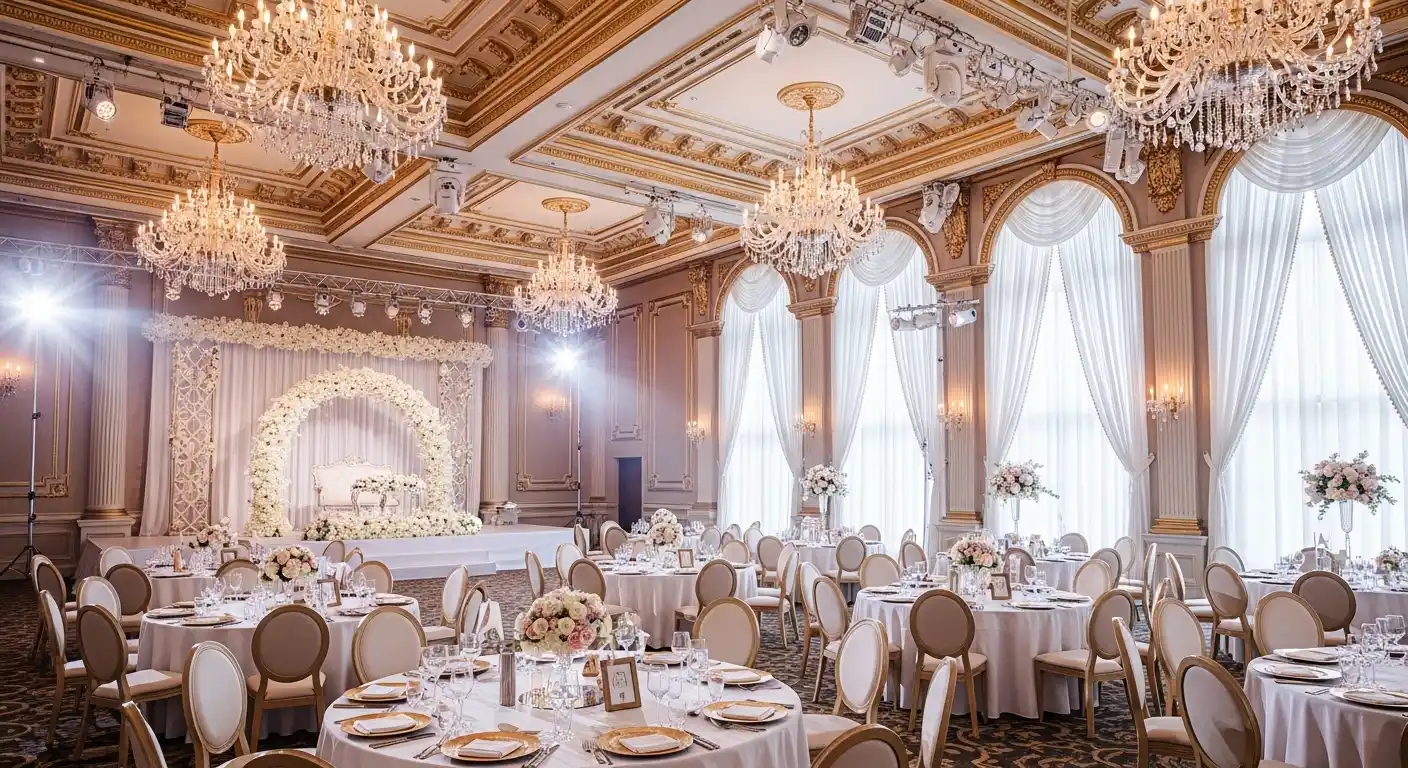
Do you envision a formal, black-tie affair in a historic museum? Or are you dreaming of a relaxed, toes-in-the-sand ceremony at a coastal resort?
Your venue should complement the aesthetic you want to achieve. If you want a modern, industrial look, you might look for converted warehouses or art galleries.
If you prefer something timeless and romantic, a vineyard or a colonial estate might be more your speed.
Choosing a venue that already fits your style will save you thousands of dollars in decor costs later on, as you won’t be trying to “hide” the natural features of the space.
Talk to a Wedding Planner First
If you have the budget for a professional planner, hire them before you look at venues.
Planners are intimately familiar with the capabilities of various spaces, the layout possibilities, and the hidden quirks that a couple might miss during a tour.
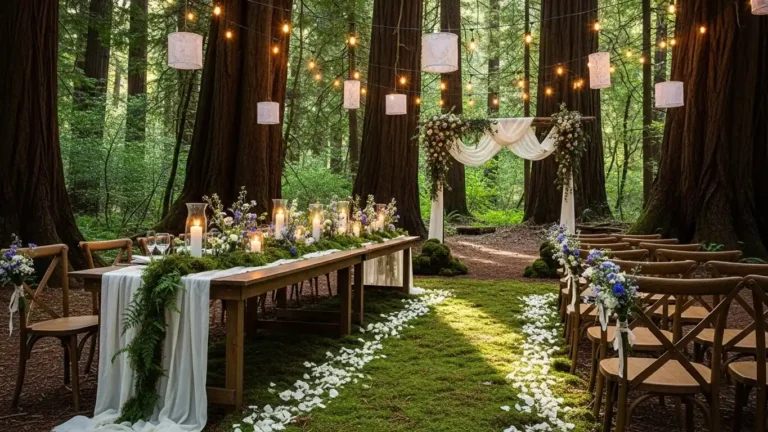
They can tell you if a venue’s “all-inclusive” package is actually a good deal or if the logistics of a remote forest wedding will blow your transportation budget.
Determine Your Guest List (Roughly)
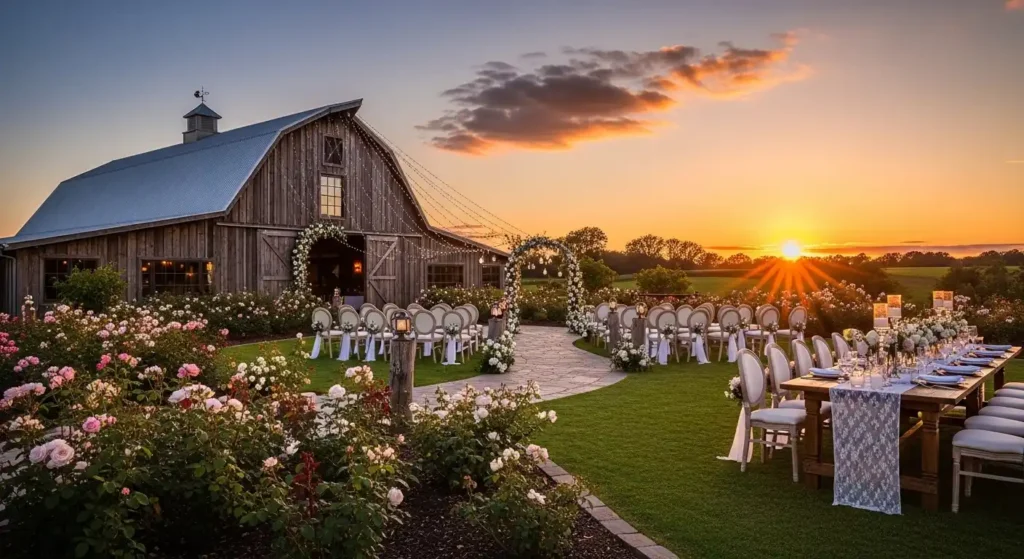
You don’t need a final headcount yet, but you do need a “ballpark” figure. There is nothing more heartbreaking than falling in love with a cozy boutique hotel that caps out at 75 guests, only to realize your “must-invite” list is 150 people.
Conversely, a room that is too large can make a wedding feel empty and lack intimacy. When researching how to choose a wedding venue, always check the “maximum capacity” versus the “comfortable capacity.”
Just because a room can fit 200 people doesn’t mean it should, especially once you add a dance floor, a buffet line, and a DJ booth.
Set a Realistic Budget
The venue and catering typically consume about 40% to 50% of your total wedding budget. Before you fall in love with a high-end estate, do the math.
Be sure to ask about the difference between a “site fee” and a “food and beverage minimum.” Some venues charge a flat fee just to rent the space, while others require you to spend a certain amount on their in-house catering. Don’t forget to account for the “hidden
Don’t forget to account for the “hidden” costs that often lurk in the fine print. When you are calculating how to choose a wedding venue within your price range, you must look beyond the base rental fee.
Many venues add a service charge (often 20% to 25%), state taxes, and gratuities. Additionally, if the venue is a “blank canvas”—meaning they provide only the space—you will need to budget for rentals.
Tables, chairs, linens, silverware, and even portable restrooms can add thousands of dollars to your final bill.
Consider the Logistics and Accessibility
A venue might be breathtakingly beautiful, but if it is a nightmare for your guests to reach, it may not be the right choice.
Consider the travel time from the nearest airport and the availability of local accommodations. If your ceremony and reception are in two different locations, how long is the drive between them?
Accessibility is also a key factor. If you have elderly guests or family members with mobility issues, ensure the venue is ADA-compliant.
Are there elevators? Are the paths paved or gravel? Are the restrooms easily accessible from the main dining area? These practical details might not be glamorous, but they are essential for the comfort of your loved ones.
All-Inclusive vs. “Build-Your-Own” Venues
One of the biggest forks in the road when deciding how to choose a wedding venue is choosing between an all-inclusive property and a “dry hire” or “blank canvas” space.
- All-Inclusive Venues: These are typically hotels, banquet halls, or established event centers. They provide the space, the catering, the bar service, and often the basic rentals like tables and linens. The benefit here is simplicity; you have one point of contact and fewer vendors to manage.
- Dry Hire Venues: These are spaces like barns, warehouses, or private estates where you rent only the four walls (or the field). You are responsible for bringing in everything from the caterer to the lighting. While this offers maximum customization and can sometimes be cheaper upfront, the logistical coordination is much higher, and the costs of individual rentals can add up quickly.
Evaluate the Layout and “Flow”
During your venue tour, try to visualize the “flow” of the day. Where will guests arrive?
Where will they go for cocktail hour while the staff flips the ceremony room for the reception? If there is a bar, is it in the same room as the dance floor?
A common mistake is choosing a venue where the bar is in a separate room or down a hallway. This can “kill” the party vibe, as half your guests will be huddled by the bar while the other half is on the dance floor.
Ideally, you want a space that keeps everyone together while still providing enough room for people to move comfortably.
The Importance of a “Plan B” (Weather Contingency)
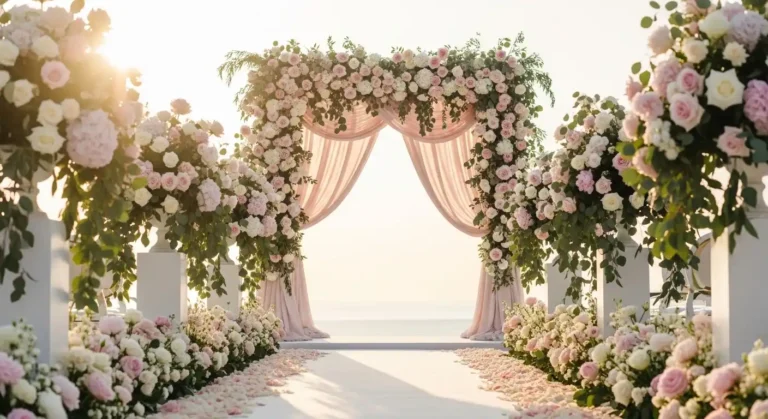
If you are dreaming of an outdoor ceremony, the most critical part of how to choose a wedding venue is falling in love with the indoor backup option. Weather is the one thing you cannot control.
Ask the venue coordinator exactly what happens if it rains. Is there a tent provided? Is there an indoor room that can be used? If the “Plan B” is a dark, cramped basement that you absolutely hate, you should probably keep looking.
You want to feel confident and happy with your venue choice regardless of whether the sun is shining or a storm is rolling in.